
How 15 Miles Get Built by 2030
Fifteen connected miles do not build themselves. Behind every trail segment are years of planning, budgeting, engineering, and coordination.
Nearly ten miles of Green Crescent Trail segments now exist across Clemson, Central, and Pendleton because elected officials, university trustees, municipal staff, engineers, donors, and residents chose to prioritize safe, connected movement over many years.
What follows are some of the key ingredients that will help our community continue to build toward our goal of 15 miles of Green Crescent Trail network by 2030.
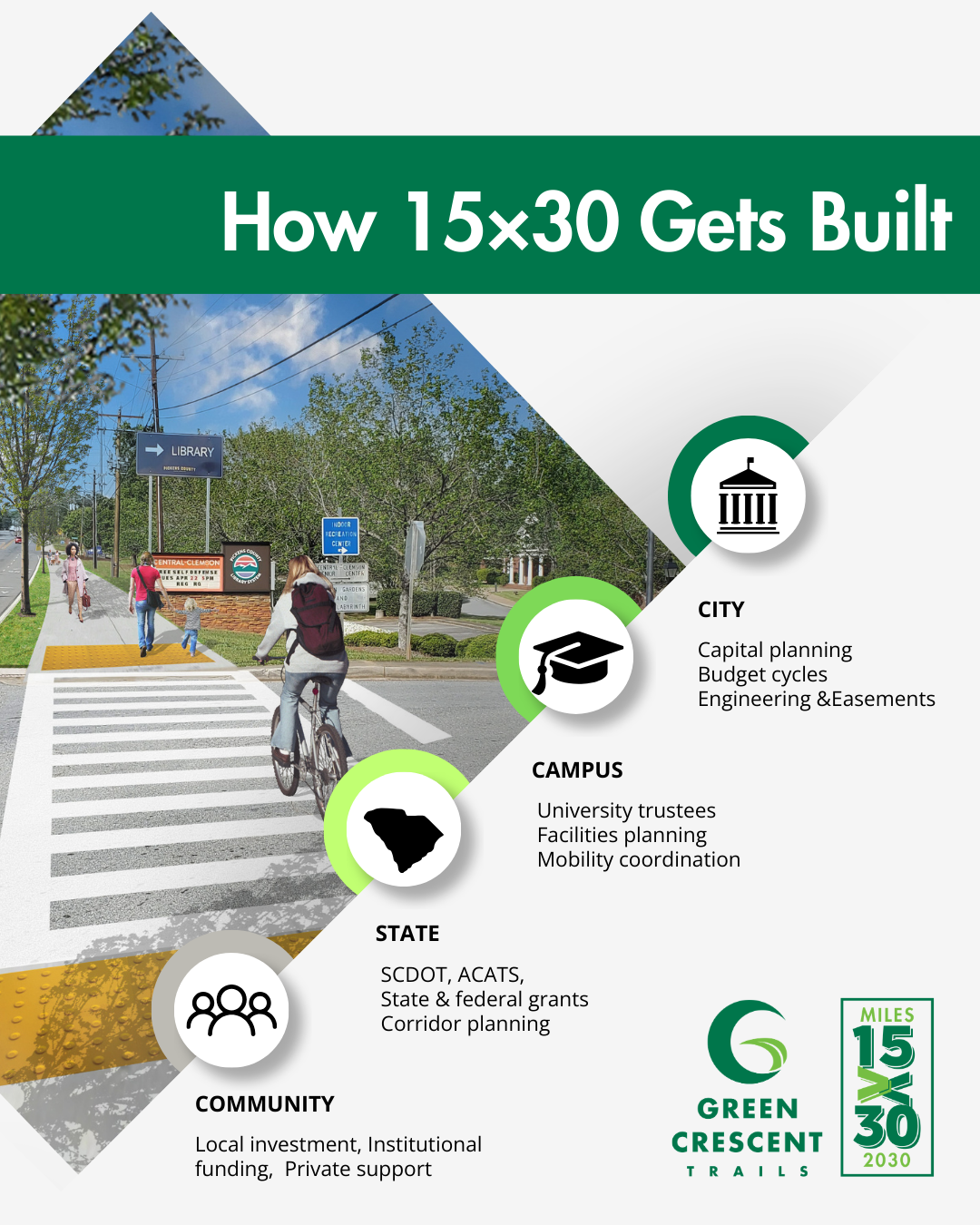
Behind every trail segment are years of planning, budgeting, engineering, and coordination.
Long-Term Commitment Required
Trail networks are not built in a single budget cycle.
They move forward through capital improvement plans, infrastructure allocations, engineering studies, grant applications, easement negotiations, and construction scheduling.
Often, visible construction is the final step in a process that began years earlier.
For example, in 2016 the City of Clemson, the Town of Central, Pickens County, Southern Wesleyan University, and Clemson University funded the original Green Crescent Trail feasibility study.
Also in 2016, Pendleton funded a Walk and Bike-Friendly Community Master Plan.
Now, 10 years later many of those planning seeds have grown into real trails on the ground.
The 15 mile network we want to see by 2030 will only come if we continue to prioritize it right now and each year moving forward.
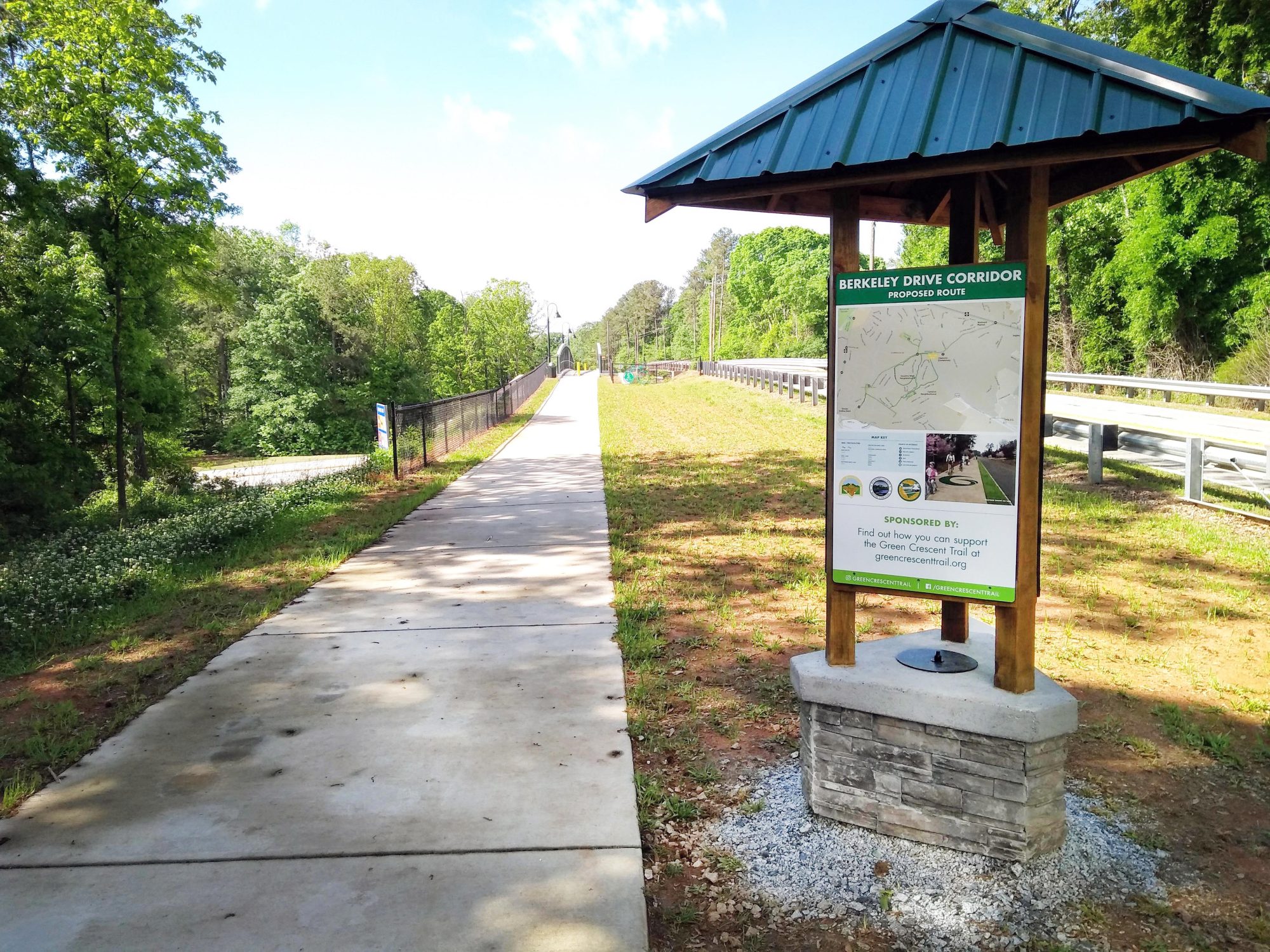
Often, visible construction is the final step in a process that began years earlier.
Town and Gown Partnerships
The Green Crescent Trail runs through three municipalities and three university campuses. Each operates independently.
Cities such as Clemson, Central, and Pendleton have elected councils and professional staff who guide policy and approve infrastructure investments.
Clemson University, Southern Wesleyan University, and Tri-County Technical College are governed by boards of trustees and administrative teams responsible for campus planning and mobility systems.
Advancing a trail connection across a university campus is often very similar to advancing one across a city corridor. It requires:
- Leadership approval
- Budget alignment
- Facilities planning
- Cross-department coordination
- Integration with broader mobility strategies
Universities are not simply destinations on the map. They are infrastructure owners and decision-makers, just like cities.
So when cities and campuses move in the same direction, small connections can unlock major regional impact.
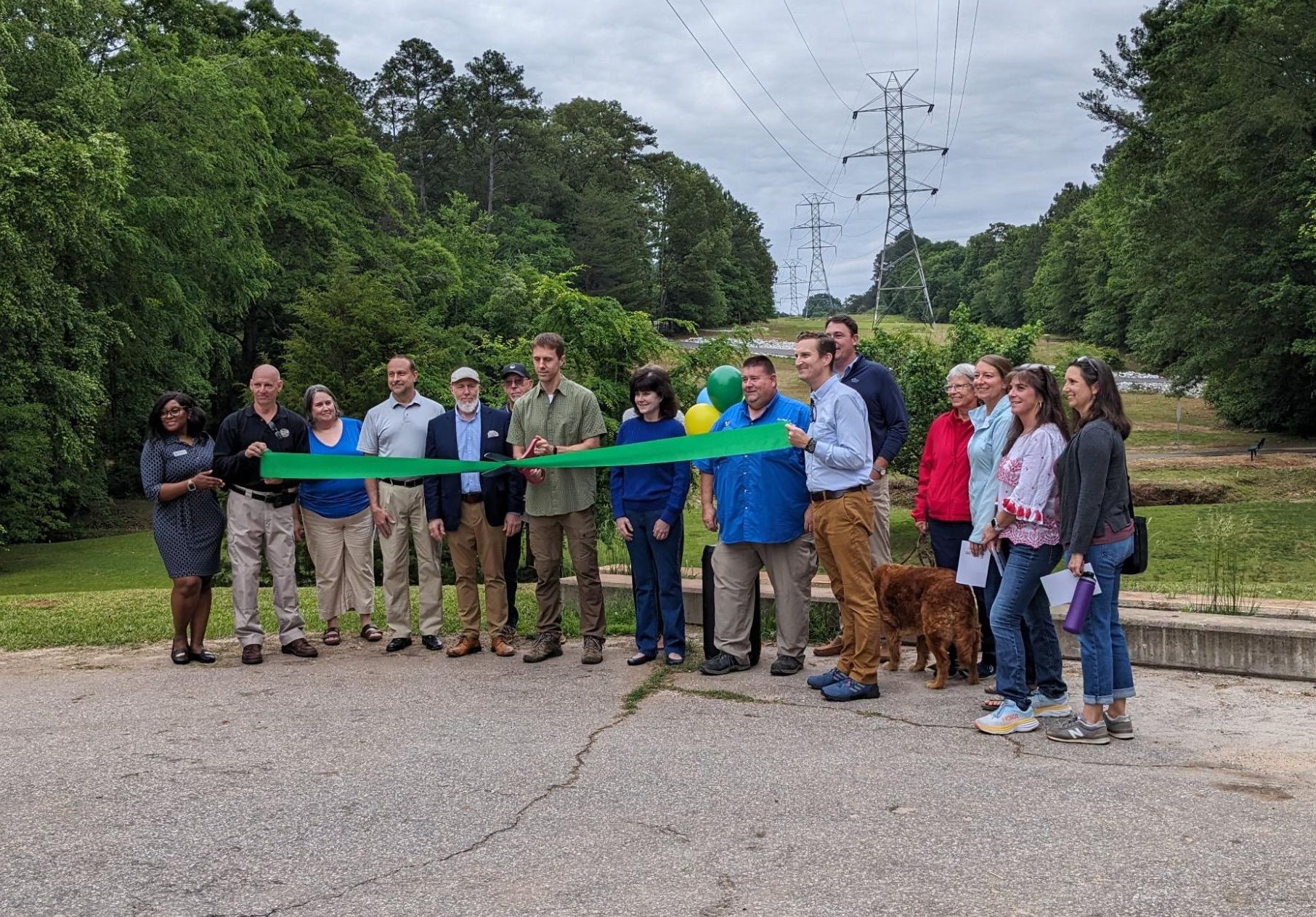
Several new trail segments are funded, under design, or positioned to move forward in 2026.
The Role of State and Regional Agencies
Many of the corridors that matter most for connectivity are controlled by the South Carolina Department of Transportation (SCDOT).
For example in Central in 2026, the SCDOT is administering the construction of a Green Crescent Trail path along Hwy 93 between downtown (the Caboose) and Tarrant St near SWU’s campus.
And regional transportation agencies plan and distribute a large amount of federal and state funds for transportation projects. In our case this is ACATS (Anderson-Clemson Area Transportation Study).
But beyond funding, trail segments often move forward when timing and opportunities align.
For example, the SCDOT’s scheduled resurfacing project on Berkeley Drive in Clemson created a window to add a sidepath and improve crossings.
And the 2023 Clemson University Perimeter Road improvement project created an opportunity to extend the Green Crescent Trail on campus.
When coordination happens early, it can:
- Reduce construction costs
- Minimize disruption
- Accelerate delivery by aligning with existing timelines
These moments do not happen by accident. They happen when institutions communicate consistently and plan with shared awareness.
That is how trail segments move from idea to construction.
How Trails Are Funded
Trail projects rarely rely on a single funding source. Instead, they are typically built through layers of investment that come together over time.
Local investment
- Municipal capital budgets
- Infrastructure allocations
State and federal grants
- General assembly funding
- Transportation safety funding
- Recreational trail programs
Institutional investment
- Campus improvements
- Facilities upgrades
Private and philanthropic support
- Foundation grants
- Corporate sponsorships
- Individual donations
In many cases, local dollars unlock grants through required matching funds. And grants accelerate timelines.
Over time, these coordinated investments lead to the trails you see.
Slow Work, Real Momentum
The pace of trail progress has been frustrating at times for many supporters of the Green Crescent Trail.
Why does it take so long?
Funding cycles vary. Easements require negotiation. Engineering takes time. Construction windows can be narrow.
Infrastructure moves deliberately because it must be safe, durable, and coordinated across multiple institutions.
But the momentum behind the Green Crescent Trail is real.
Several new trail segments are funded, under design, or positioned to move forward in 2026. The coming year is likely to bring more visible trail progress than any year in the past, built on years of coordination already underway.
Long-term infrastructure moves forward in waves. What becomes visible tomorrow is shaped by decisions made today.
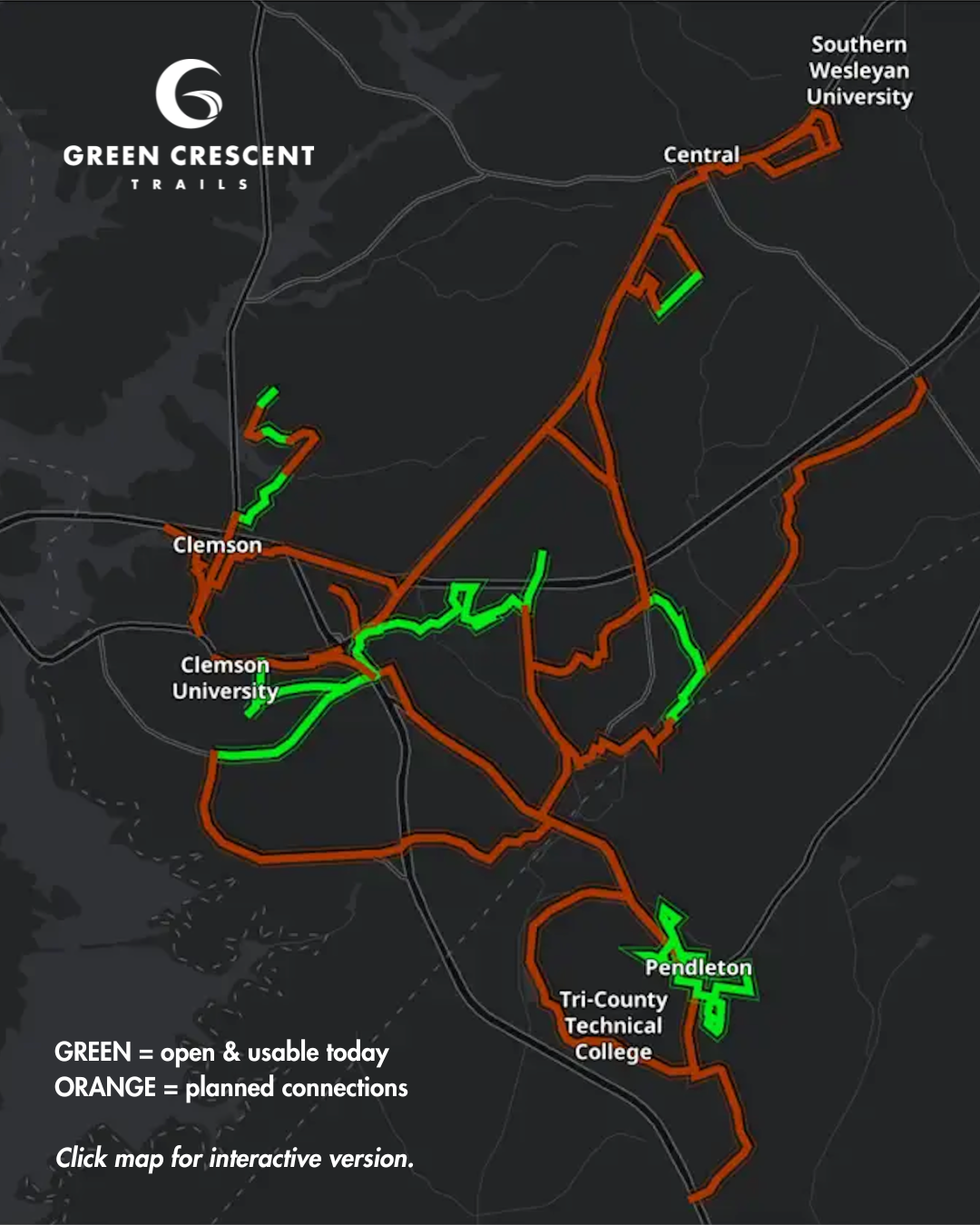
A Shared Effort
The 15×30 campaign is not simply a construction goal. It is a coordination goal.
It asks cities, universities, state agencies, donors, businesses, and residents to move in the same direction over time.
When that happens:
- Students move more safely between housing and campus.
- Families reach parks and schools with greater confidence.
- Downtowns become easier to access without increasing congestion.
- Neighborhoods feel less isolated from one another.
Fifteen miles by 2030 is achievable.
But it gets built the same way every segment has been built so far … through steady partnership, disciplined planning, and long-term commitment.
That is the work behind the Green Crescent Trail.
Thanks for your support!

